
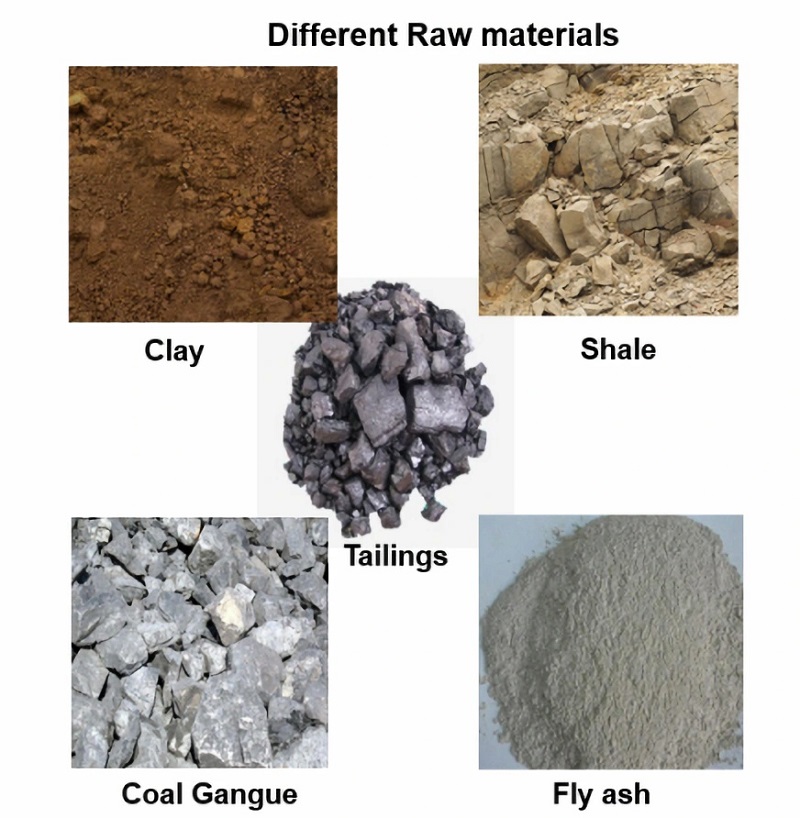
Why do some brick factories suffer from high cracking rates, low product strength, or skyrocketing fuel consumption? The secret lies not just in the kiln, but in the raw materials. Whether you are setting up a new plant for clay bricks, shale bricks, or coal gangue bricks, understanding the raw materials’ chemical and physical properties is vital.
As a global leader in heavy clay production lines, Brickmac knows that matching material properties with advanced clay preparation and molding equipment is the key to high-efficiency manufacturing. Here is a technical breakdown of sintered brick raw material requirements.
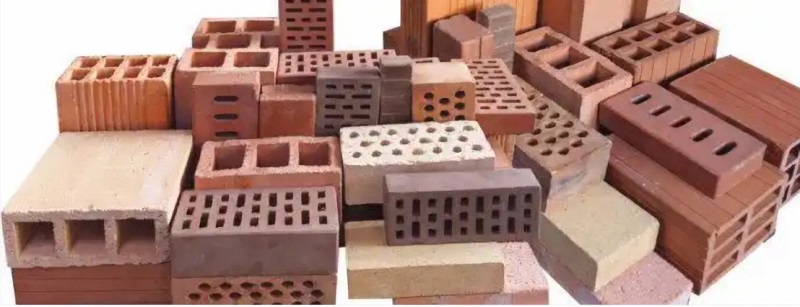
Whether a material can be used to produce qualified sintered bricks mainly depends on its physical properties, while chemical composition exerts an indirect influence on product performance. Chemical analysis can serve as a reference for raw material evaluation. Routine chemical analysis tests silicon dioxide, aluminium oxide, ferric oxide, calcium oxide, magnesium oxide, sulfur trioxide and loss on ignition, etc.
SiO₂ (silicon dioxide) is the major component of sintered brick raw materials, with a typical content of 55~70%. Excessively high SiO₂ content will greatly reduce raw material plasticity and limit the final strength of finished bricks.
The suitable content of Al₂O₃ (aluminium oxide) in raw materials is 10~20%. If below 10%, the mechanical strength of bricks decreases. If above 20%, although product strength is higher, the required firing temperature rises, fuel consumption increases, and the brick colour fades.
Fe₂O₃ (ferric oxide) acts as a colouring agent in brick-making raw materials, with a preferred range of 3~10%. Too high Fe₂O₃ content will lower the refractoriness of the product.
CaO (calcium oxide) originates from limestone (CaCO₃) in raw materials and is regarded as a harmful component. Its content should not exceed 10%. Excess calcium oxide narrows the sintering temperature range. When CaO content exceeds 15%, the sintering range will shrink by 25℃, bringing difficulties to firing operation. If limestone particles are larger than 2 mm, weak bricks or lime popping are highly likely to occur, which may cause severe deformation, moisture absorption, disintegration and powdering of the bricks.
MgO (magnesium oxide) content in raw materials shall not exceed 3%, and lower content is preferred. Its compounds such as magnesium sulfate will cause white efflorescence on brick surfaces and degrade product quality.
SO₃ (sulfur trioxide) content in raw materials is generally limited to 1% or less, and lower is better. Sulfur trioxide released during firing may cause brick expansion and blistering. Other sulfur-containing substances are also detrimental: calcium sulfate results in whitening and efflorescence, and magnesium sulfate leads to efflorescence and expansion of finished bricks.
Table of Chemical Composition Requirement Ranges for Raw Materials of Coal Gangue Bricks, Clay Bricks, Shale Bricks, Fly Ash Bricks and Sintered Bricks
| Name | Item | Condition | Requirement Level (%) |
| Chemical Composition | SiO₂ -Silicon Dioxide | Optimum | 55~70 |
| Permissible | 55~80 | ||
| Al₂O₃ -Aluminium Oxide | Optimum | 3~10 | |
| Permissible | 2~15 | ||
| Fe₂O₃ -Ferric Oxide | Optimum | 10~20 | |
| Permissible | 5~25 | ||
| CaO -Calcium Oxide | Permissible | 0~15 | |
| MgO -Magnesium Oxide | Permissible | 0~5 | |
| SO₃ -Sulfur Trioxide | Permissible | 0~3 | |
| Loss on Ignition (LOI) | Permissible | 3~15 | |
| Limestone Content | Particle size <0.5 mm | Optimum | 0~25 |
| Particle size 0.5~2 mm | Permissible | 0~2 |
Raw material physical property tests normally include particle size distribution, plasticity, shrinkage rate, drying sensitivity and sinterability.
Particle size distribution refers to the quantitative content of particles of different sizes in brick-making raw materials. It exerts a significant direct impact on plasticity, shrinkage rate and sinterability. Finer particles deliver higher plasticity, accompanied by greater shrinkage and higher drying sensitivity coefficient. Particles smaller than 0.05 mm are defined as plastic particles; particles from 0.05 mm to 1.2 mm are filler particles; particles from 1.2 mm to 2 mm are coarse skeleton particles. A well-graded particle composition: plastic particles account for 35~50%, filler particles 20~65%, and skeleton particles less than 30%.
Plasticity is the property that raw materials mixed with proper water can be shaped into arbitrary forms after mixing and mulling. The plasticity index reflects the moisture range at plastic state and the plastic degree of raw materials, calculated as the difference between liquid limit and plastic limit. High plasticity benefits extrusion forming yet tends to induce cracks during drying and firing. Low plasticity facilitates drying and firing, but creates forming difficulties. When the plasticity index is below 7, extrusion forming becomes difficult and the final product strength will be impaired. The generally applicable plasticity index ranges from 7 to 15. Higher void ratio, complex hole shapes and thin walls require a higher plasticity index for forming. Clay has a high plasticity index, some exceeding 25; coal gangue shows low plasticity index, some below 7; argillaceous shale normally ranges from 7 to 18.
During drying of the green brick, evaporation of mechanically bound water causes particles within the green body to draw closer, resulting in volume reduction. This phenomenon is known as drying shrinkage. It is commonly expressed as the percentage ratio of the shrinkage length to the original length of the green body, termed linear drying shrinkage rate.
When the dried green body is subjected to firing, a series of physical and chemical reactions take place. Fusible impurities form liquid phases that fill the gaps between particles and lead to further shrinkage of the green body. This is called firing shrinkage, expressed as the percentage ratio of the shrinkage length to the length of the dried green body, namely linear firing shrinkage rate.
In production, the linear shrinkage rate of raw materials is required to be less than 6%. Otherwise, lean additives shall be blended into the raw materials for lean treatment. Shrinkage rate is a critical property of the green body. Products with excessive shrinkage must not be dried too rapidly; otherwise, cracks tend to form and impair product quality.
The green brick contains a large amount of moisture. During drying, moisture evaporates gradually and the volume shrinks accordingly. However, the drying speed differs between the interior and exterior of the green body: the surface dries faster than the core, and their shrinkage rates are inconsistent. The surface shrinks rapidly while the inner part shrinks slowly.
This generates compressive stress inside the green body and tensile stress on its surface. Improper drying control will cause surface cracking of the green body, which is described as drying sensitivity. Generally, a higher plasticity index of the clay mixture corresponds to higher linear drying shrinkage and higher drying sensitivity coefficient. The drying sensitivity level of raw materials is quantified by the drying sensitivity coefficient.
Evaluating the chemical composition and physical boundaries of your raw materials is the first and most critical step in building a profitable brick plant. High linear shrinkage or unfavorable chemical balances can be successfully mitigated by implementing correctly engineered clay preparation, precise extrusion, and automated thermal systems.
At Brickmac, we don’t just supply world-class brick-making machines; we provide comprehensive turnkey engineering solutions based on your local raw materials.
Ready to upgrade your brick production efficiency or need a raw material compatibility analysis? Contact Brickmac Engineers Today or email us at info@brickmac.com to get a tailored technical proposal!
