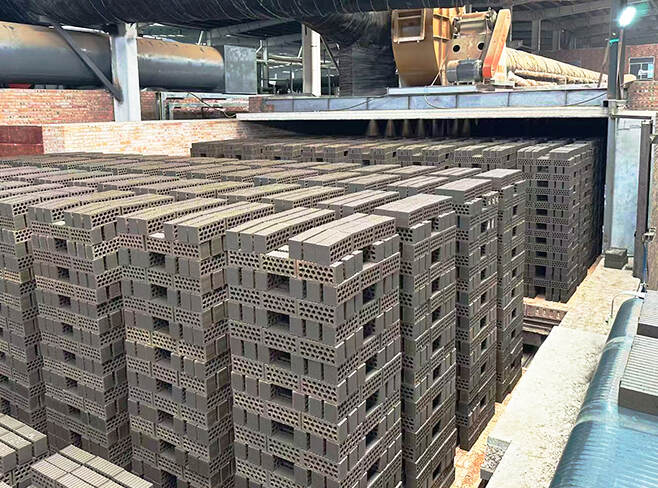
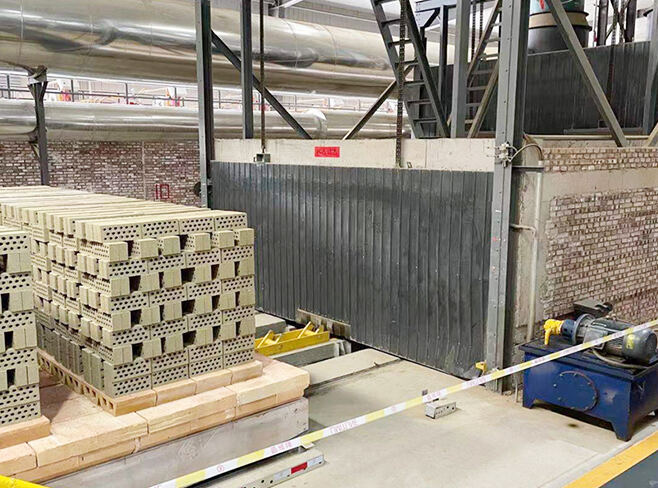
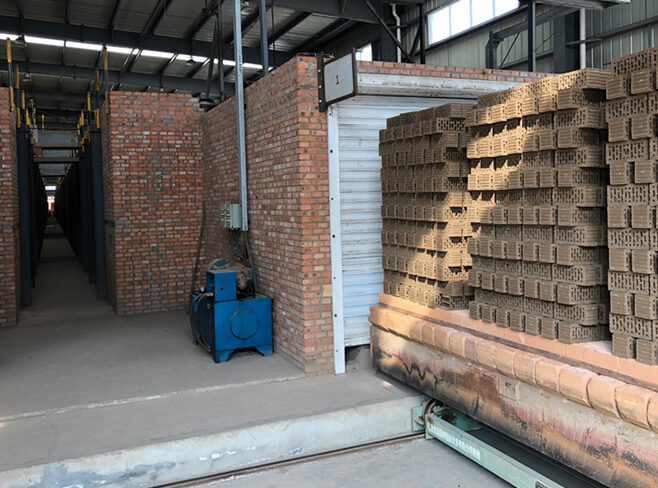
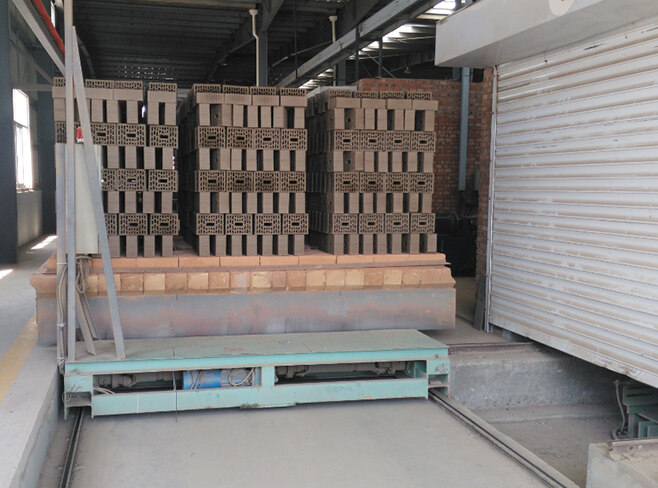
Direct setting Tunnel dryer is continuous drying system, brick directly stacking onto kiln wagon after molding and cutting (do not need additional dryer cart), then enter tunnel dryer for drying and tunnel kiln for firing, no movement during drying and firing, which is most cost effective solution for brick makers that can adopt stiff extrusion. It is suitable for normal products like solid bricks, perforated bricks.
Continuous operation with large output and short cycle, suitable for stable mass production of brick blanks of the same specification.
Controllable and stable drying cycle: Temperature, humidity and wind speed are distributed in gradients along the kiln length, and brick blanks pass through at a constant speed, enabling precise control of drying time.
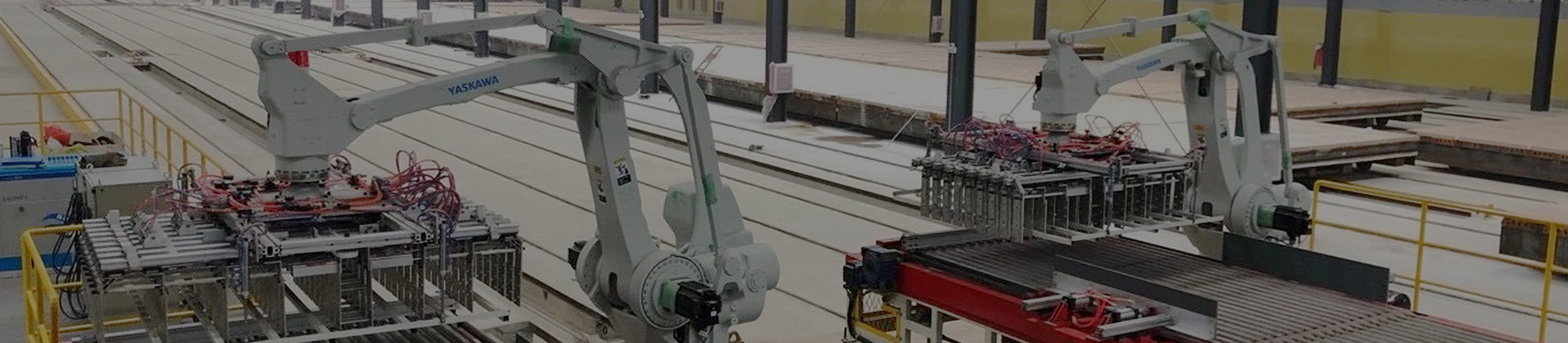
Easy integration with mechanization & automation: Seamless connection with brick setting machines, tunnel firing kilns and brick unloading & packing lines, facilitating full-line automation and reducing labor.
Countercurrent heat exchange with extremely high thermal efficiency: Hot air is fed from the kiln rear (high-temperature zone) and flows counter to wet blanks, realizing step-by-step waste heat recovery; saves 20%–50% energy compared with chamber dryers.
In-depth utilization of firing kiln waste heat: Hot air from the cooling zone of the tunnel firing kiln is directly used as the drying heat source, basically eliminating the need for extra fuel and greatly reducing overall energy consumption.
Good kiln sealing and thermal insulation: Reduces air leakage and heat dissipation, minimizes heat loss and lowers energy consumption per unit product.
Uniform temperature and humidity, fewer drying defects: Reasonable air distribution (bottom/side feeding + top/side exhaust) ensures even heating and dehydration of green bricks, greatly reducing the rejection rate caused by cracking, deformation and other defects.
Gentle gradient in the drying process: Avoids rapid drying or overheating, reduces internal stress of blanks, and delivers more stable and consistent finished product strength.
Adaptable to high-moisture raw materials: Capable of processing high-moisture materials such as sludge, tailings and muck, expanding the scope of applicable raw materials.
Low labor intensity, less manpower demand and high automation.
Easy to meet environmental standards: Moisture exhaust is collected and treated centrally, supporting dust removal, desulfurization and denitrification; flue gas can be recycled or purified, with less fugitive emission, making it easier to meet ultra-low emission requirements.
Long service life and simple maintenance: The kiln body avoids frequent thermal shock with stable structure; major overhaul is generally required every 5–7 years, and daily maintenance is much less than that of batch kilns.
Low unit production cost: Energy saving, labor saving and high product yield lead to a significant drop in overall cost.
Simple production management: Stable process parameters facilitate digital control, reduce human-induced fluctuations, and support quality traceability and production scheduling.